
 Charles K. Millwood
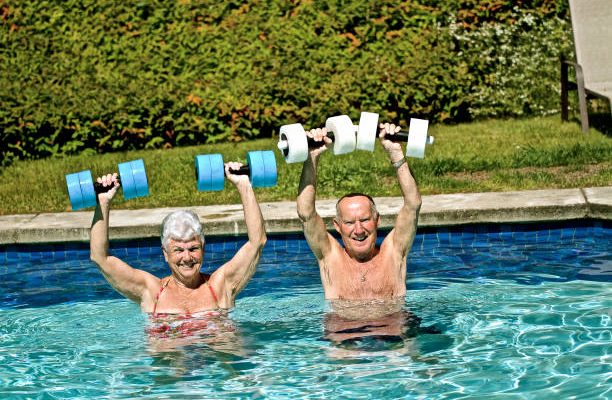
Many people learn lessons from life and discover ways to live in moderation
If you think of your age and aging, what’s the first image that comes to your mind? Are you thinking that your hair’s becoming darker (or going away wholly), your skin looks wrinkled, or are you unable to keep up with your physical aplomb? If you’re one of those who is narcissistic, the threat to your appearance or sense of self-confidence could be pretty unbearable. You could imagine being so scared that their narcissism levels are higher than before.
Another issue that those with a high level of Narcissism may encounter is the existence of stereotypes in the culture regarding beauty and youth. If they lose the qualities emphasized in all media, the idea of not being in line with society’s values could cause an additional existence-threatening situation for selfish people.
All of this could be combined with the inequities in cultural stereotypes that are based on gender and age, which is that women have a loss of beauty while men are more attractive with gray hair and some “smile lines.” As this, it is possible that the self-esteem “crisis” of aging could be even more evident for aging women.
The Theory of the Aging Narcissist
According to Michigan State University’s Rebekka Weidmann and coworkers (2023), The issue of aging’s relation to Narcissism is an enigma. Narcissism doesn’t rise in later life but instead has a steady decline. In their recent meta-analysis, which is prominent on a scale of more than 250,000 participants, the international group of authors began by stating, “The perception that young people are more self-involved and narcissistic than older people has long been prevailing” (p. 1278). The preliminary longitudinal results that they affirm this conclusion.
Digging further into previous studies, Weidmann et al. note that the earlier findings do not consider the different definitions of Narcissism. In addition, the studies differ in how they were considered, and the results do not distinguish between the grandiose (self-absorbed and self-centered) as well as fragile (haunted with feelings of inadequateness). You may already be aware that in specific methods of Narcissism, both kinds of Narcissism are thought to be rooted in the same convictions of being inferior. However, prior studies have diverged in the degree to which they concentrate on either or both of these characteristics.
However, according to Weidmann and her coworkers, another aspect should be considered. The most recent theories on Narcissism discuss the concept of a “trifurcated” perspective. One component of the narcissism problem includes “agentic,” often called “narcissistic admiration.” Piece number two is “antagonistic,” also called “narcissistic rivalry.” Neurotic or vulnerable Narcissism is the third element within this view.
It is possible that aging impacts the three elements differently. More selfish people could be at risk from the degrading effects of aging on their image to other people. The feeling of vulnerability can be heightened. It is possible to discern the elements of Narcissism. Makes sense when knowing the effects of aging on those high in these traits precisely.
Testing the Age-Gender-Narcissism Relationship
In two separate studies derived from online data collection and the collation of vast amounts of data from earlier research, The Michigan State-led research team tested the fundamental statistical formula for comparing the effects of gender, age, and the interplay of gender and age in Narcissism scores. Interestingly enough, in the context of the negative messages that are aimed at women regarding aging and getting older, every comparison by gender resulted in more scores in males.
In the eight narcissism scales which the authors employed for their studies and analyzed, only the narcissism measure taken from the manual that is used to diagnose psychiatric disorders, and it was the Diagnostic and Statistical Manual of Mental Disorders (DSM), was found to be higher across different the age range, but only for males. At the same time, this was a deterrent to the capability of the researchers to assess the three parts of Narcissism. Difficult to discern the conclusions based on this; however, the results for males were less evident on antagonistic and agentic Narcissism.
At the very least, on an inter-sectional scale (i.e., it is not following the same group of people throughout time), age does appear to be connected to Narcissism in ways that oppose what is known as the “theory of the aging narcissist.” Those high in Narcissism at a young age get to an era when they surrender their claims to be great and cease competing with others and accept their flaws.
It is important to remember that, despite the appearance of these congruities, they were minor. Variations across instruments and samples are an advantage because they allow for generalization. However, it would not have been possible with this vast and varied data collection to determine the paths taken by people who exhibit Narcissism to the point of being clinical.
Learning to Adapt
It’s possible, then, that the situation that awaits those who are “average” (i.e., nonclinical) narcissists isn’t at all evil in the context of aging. Life experiences teach people, especially men, that they aren’t as significant as they considered themselves when they were young. While some scientists complain about the egocentric Narcissism prevalent among “today’s” young adults (an assertion that dates back 15 years), there may be certain advantages of entering adulthood with confidence in oneself. From a developmental perspective, it is the time to complete the beginning of identity development. It is possible to adapt to feel confident in your abilities when stepping into a world of competition that will see you constantly being tested.
The change after this initial surge of confidence could be due to many different personal and social reasons. Concerning the aspects of physical appearance and appearance previously identified as potential risks to the narcissist who is getting older, maybe it’s those who make the necessary changes designed to protect their appearance and capabilities. They are the ones who are willing to spend the money to purchase “anti-aging” products or take huge chunks of their days for a workout at the gym.







