
 Charles K. Millwood
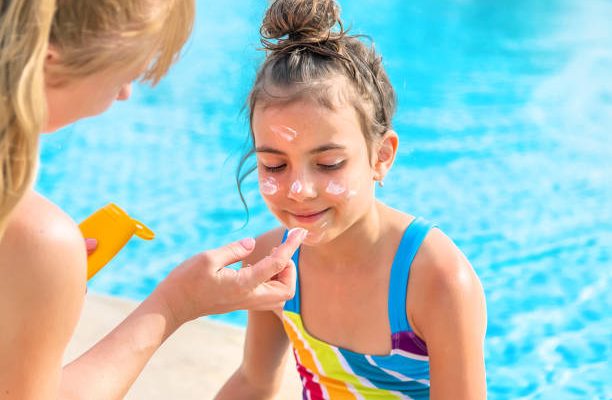
With summer fast approaching, caregivers and families must understand and implement healthy skin habits.
We talked with Carol Cheng, MD, a UCLA Health board-certified pediatric dermatologist, for advice on what to keep an eye out for and ways to protect your children’s skin this summer.
Q What are your suggestions to protect infants from sunburn? Until an adolescent age?
A: Finding shade is the initial and most effective method to protect yourself from sunburn. Another option is wearing sun-protective clothing, such as hats with wide brims, long sleeves, rash guards, and sunglasses. The third option is to apply a broad-spectrum sunblock with a sun protection factor (SPF) that is 30 or more.
For infants under six months old, it is recommended that children under six months are protected by the American Academy of Pediatrics (AAP), which advises against direct sun, viding shade with an umbrella or under the shadow of their stroller, and wearing sun-protective clothing. The idea is to avoid sunscreen use for infants younger than six months. If it is impossible to prevent this, the mineral-based sunscreen could be used in regions that cannot cover or shade with clothing.
It’s beneficial to become familiar with reading the sunscreen label. There are four major elements.
- Broad spectrum means sunscreen effectively protects ultraviolet A (UVA) and ultraviolet B (UVB) radiations. UVB could cause harm to the skin and even cause cancer
- SPF is the acronym for sun protection. The SPF number will tell you the time it takes for the UV radiation from the sun to cause burns or redness when using sunscreen compared to the time spent without sunscreen. For instance, if a person not wearing sunscreen was to burn within 10 minutes, using sunscreen with SPF 30 means it will take 30 times longer to burn, provided you apply the sunscreen properly.
- Water-resistant: The words “water/sweat resistant” indicate whether the sunscreen works in the event of exercising or swimming. There aren’t any “waterproof” sunscreens.
- Active ingredient(s) Active ingredient(s): These are the main ingredients in sunscreens that shield your skin from UV rays. There are two kinds of sunscreen components: physical and chemical. Chemical elements, like Avobenzone, act by absorption of UV radiation, while physical details, like zinc oxide, remain in the skin to block UV radiation.
Dr. Cheng says she and other dermatologists for children suggest using physical ingredients, often mineral sunscreens, made of titanium dioxide or zinc oxide for babies and children. These products reduce irritation to the sensitive skin.
“We recommend using a broad spectrum sunscreen with SPF 30 or greater,” she declares. “Our general advice is to apply sunscreen each two hours continuous exposure to the sun. If your child gets into the water or sweats, use an anti-water sunscreen and apply after swimming.”
Cheng, Dr. Cheng notes that data from the American Academy of Dermatology reveal that sunscreen can protect us from skin cancers that could develop and that even a sunburn blister in our childhood could double the chance of developing melanoma later in adulthood.
A: What should you do when your child suffers from sunburn?
A suggestion: Apply a cold pack or bathe in cool water. Aloe vera may also be helpful. Hydrocortisone cream, available over the counter, is also a great option to alleviate itchy, red, or irritated skin and aid in treating inflammation. If your sunburn is uncomfortable or widespread, talk to your doctor about Ibuprofen is a good choice for children older than. If you experience any blisters, you should consult a pediatric dermatologist.
A: What can you recognize as a heat rash? And what can you do to prevent it?
A: The heat rash occurs when sweat ducts or glands are blocked. They usually appear as tiny, itchy, red, or red spots on your skin, especially on regions where the skin is blocked. For instance, during a hot day, a child in the car seat for an extended drive may be affected by an irritant on their back since they’re sweating for an extended period.
To avoid a heat rash during hot days, avoid extreme heat for long periods. Also, aim to find more excellent spots or ones that are air-conditioned. You may consider bringing a portable air conditioner to stop strollers from overheating. Wearing loose-fitting, lightweight, and breathable clothes, like cotton ones, is beneficial. When planning your outdoor activities, try to plan your activities during the coolest part of the day. Avoid going out between 10 am and 2 pm, when the sun can be hot. Also, at home, always keep the fan or air conditioner to avoid the risk of heat eruptions.
Q: Do you have any guidelines for post-pool skincare?
A: Some individuals may be more sensitive to the development of dry skin after exposure to a chlorinated environment. We suggest washing off thoroughly using warm or cool water after exiting the pool. Use a gentle soap to wash salt or chlorine from your body, which could irritate the skin. Apply a mild moisturizing cream that is fragrance-free to replenish the skin. This is particularly important for those who swim regularly or suffer from skin-sensitive conditions like eczema.
Other skin-related problems most common in the summer include warts, bug bites der, mastitis caused by poison oak, blisters, and athlete’s feet.
General advice from Dr. Cheng includes:
- Make sure you are clean after engaging in public spaces such as swimming pools or play gyms
- Avoid walking barefoot in public spaces to avoid infection from viruses like fungus and warts.
- The over-the-counter medications that contain salicylic acid can help with warts. You can also contact your dermatologist or child’s doctor.
- Hydrocortisone over the counter can assist with insect bites and poison oak; however, sometimes, a stronger prescription may be required.
- If your child has an injury to the skin that is blistering and not healing within one week, is experiencing severe pain, or is suffering from signs of a systemic problem, consult your dermatologist or pediatrician.







